
Introduction
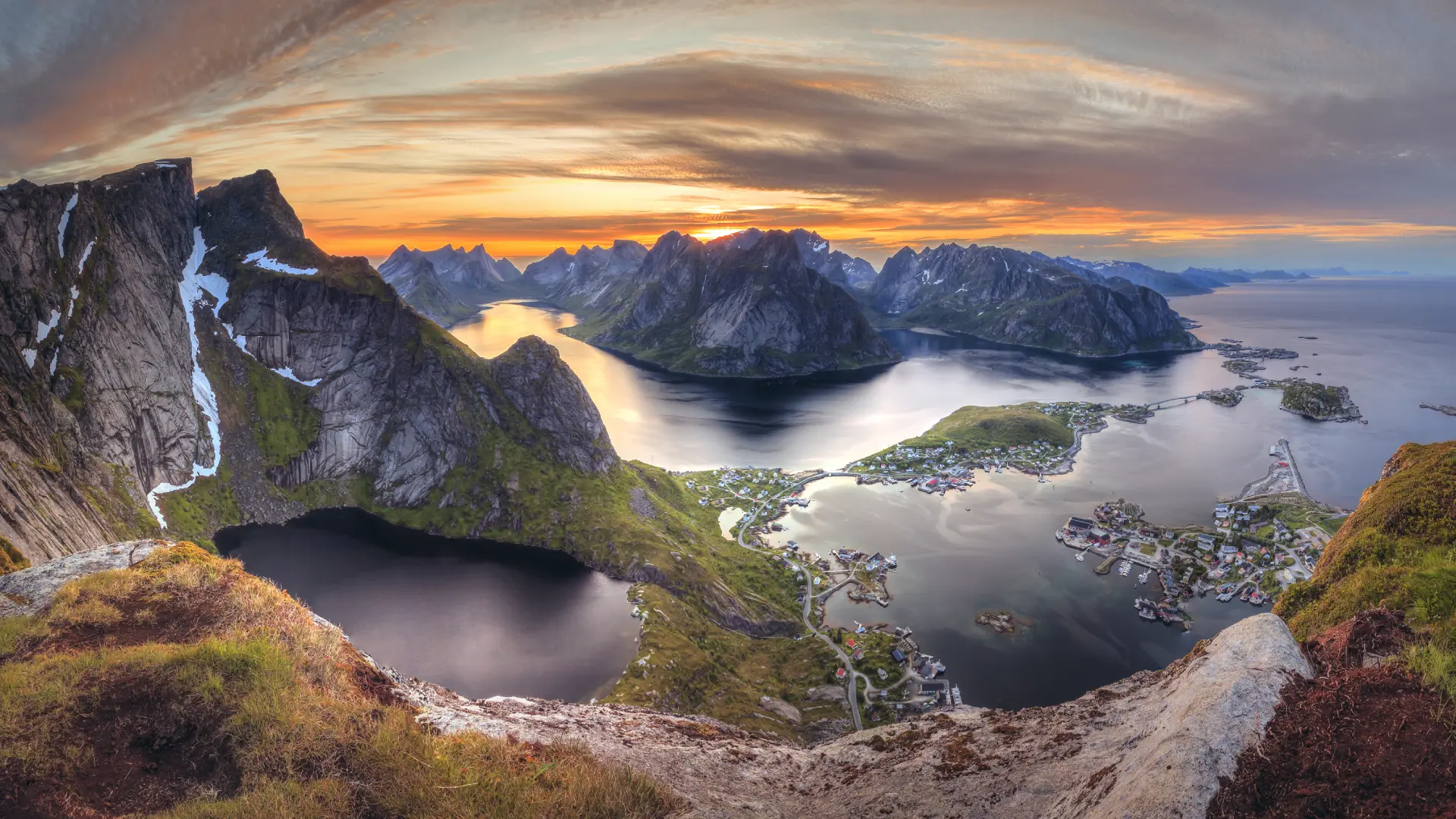
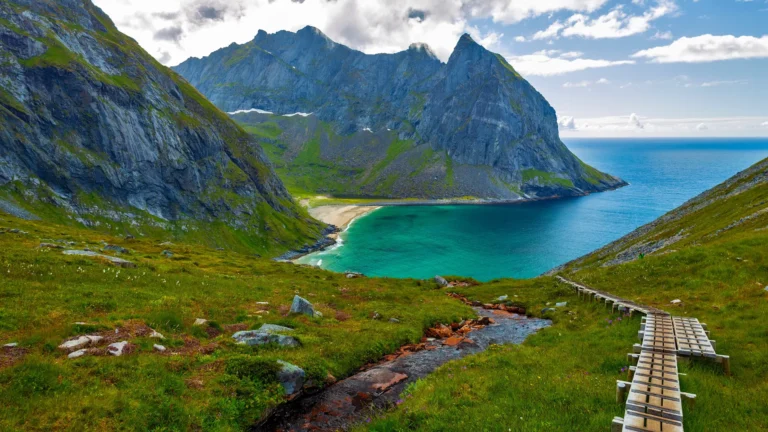
Hiking is one of the most immersive ways to experience the Lofoten Islands. Mountains rise sharply from the sea, and many trails begin near the road, so expansive views are accessible without long approaches or multi-day trips.
At the same time, hiking in Lofoten is rarely casual. Trails gain elevation quickly, exposure increases fast, and weather can shift within hours. Even short routes demand attention and a willingness to adjust plans. What seems manageable on a map can feel very different when wind, rain, or low clouds move in.
This guide introduces hiking in the Lofoten Islands through three difficulty levels: easy, moderate, and demanding. Easy hikes follow mostly flat or gently sloping terrain with little elevation gain. Moderate hikes are steeper and require more effort, but stay on clear trails. Demanding hikes involve longer distances, significant elevation, exposure, and require experience. Rather than listing every trail, the aim is to give a sense of what different hikes feel like in practice and how to choose routes that match both goals and conditions.
Hiking is one part of a broader range of outdoor activities. For a wider view, see our guide to activities and things to do in the Lofoten Islands.
Easy Walks and Scenic Hikes
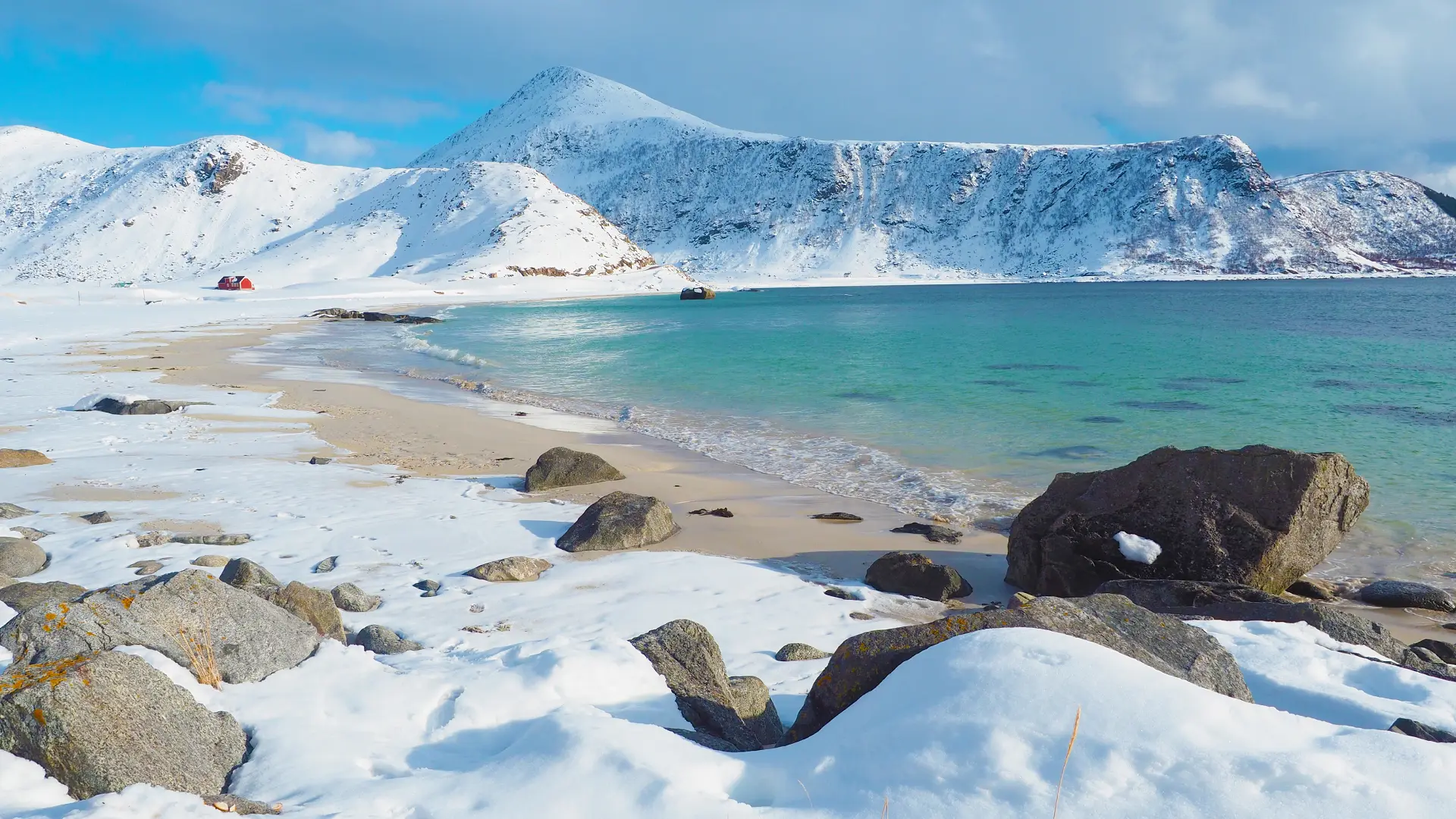
Not every hike in Lofoten involves strenuous climbs or exposed ridges. Many rewarding walks stay close to sea level and require minimal planning. These routes often follow beaches, coastal paths, or gentle slopes, offering open views of the ocean and surrounding peaks.
Kvalvika Beach, Haukland Beach, and the coastal trails near Henningsvær are good examples. Terrain is manageable, distances are short, and the reward comes from the contrast between sea and mountains rather than elevation.
Easy hikes work well on arrival days, recovery days, or when the weather makes higher ground less appealing. Coastal areas often offer better visibility and a more relaxed experience when clouds or wind limit access to the peaks.
Because access is straightforward, these walks fit easily into any day. They can be shortened, extended, or paired with visits to nearby villages. For many visitors, easy hikes become a regular part of the daily rhythm rather than separate plans.
Moderate Mountain Hikes
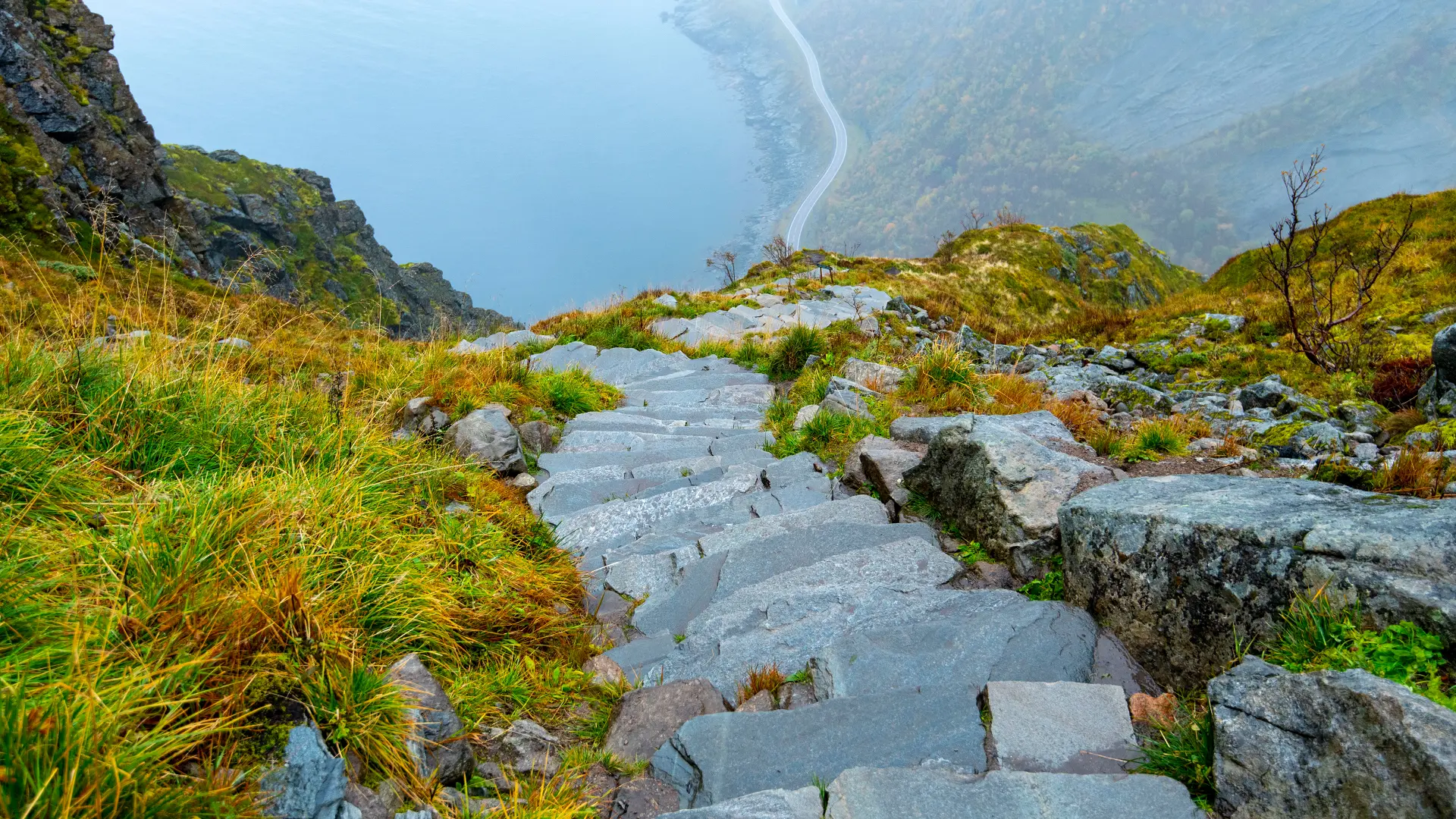
Moderate hikes form the core of most hiking-focused trips to Lofoten. These routes are usually short in distance but steep, gaining elevation quickly from near sea level. The climb often begins immediately, and the landscape opens up fast as height is gained.
Well-known examples include Reinebringen, Offersøykammen, and Ryten. Each follows a clear trail, but none should be underestimated. Stone steps, loose ground, exposure, and weather all influence how demanding these hikes feel. Even well-maintained paths can become challenging when conditions are wet or windy.
The appeal of moderate hikes lies in how efficiently they deliver views. Fjords, fishing villages, beaches, and open sea appear far below, often with little shelter along the route. These hikes reward steady pacing rather than speed, and pauses are part of the experience.
Most moderate hikes take half a day and pair well with coastal stops or village visits. In summer, long daylight provides flexible timing. Outside of summer, careful planning matters more, particularly when weather and daylight reduce margins.
Demanding Routes and High Ridges
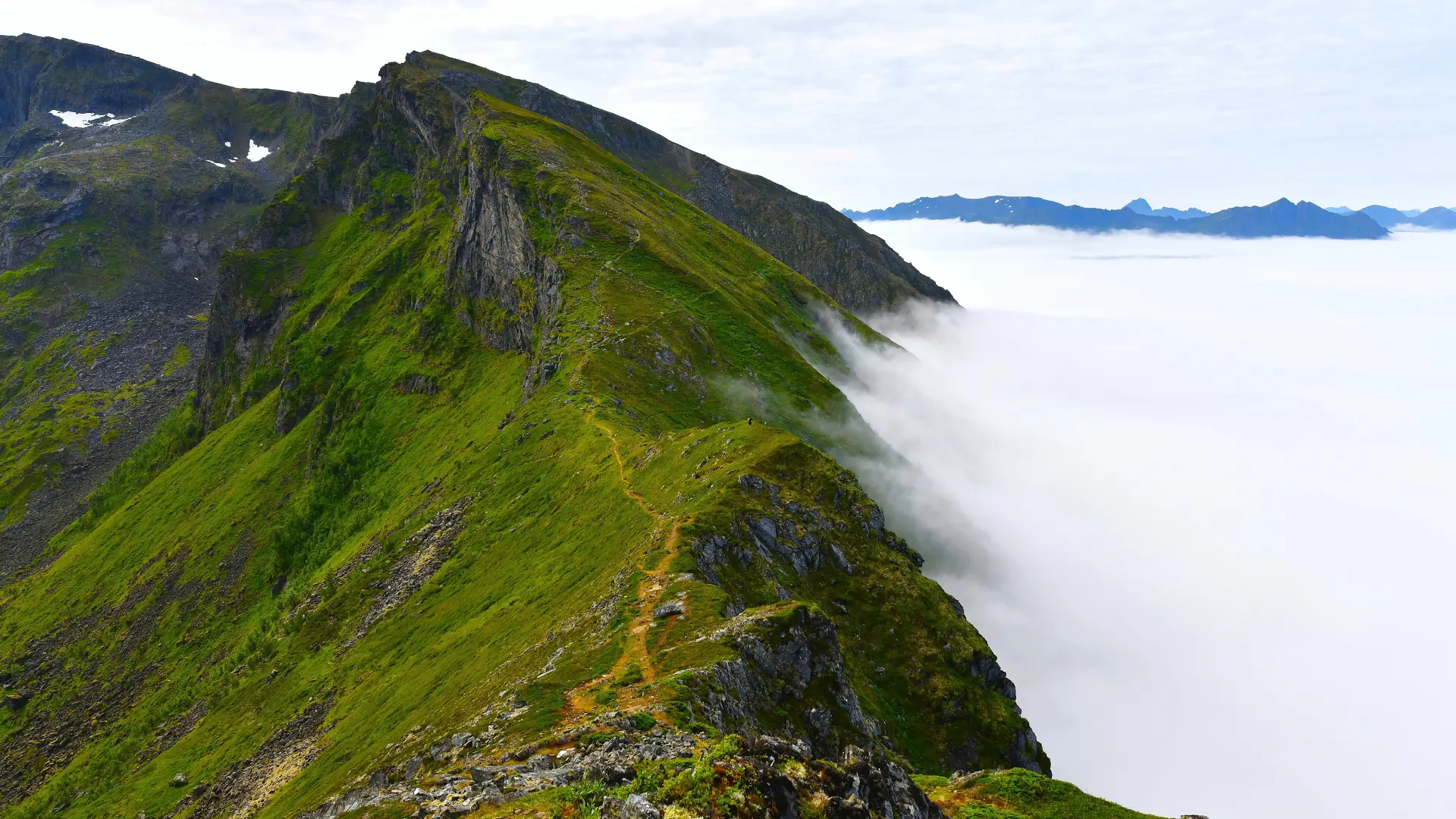
For experienced hikers, Lofoten offers longer and more demanding routes that reach higher elevations and more remote terrain. These hikes involve sustained climbs, rugged ground, and sections where exposure becomes a constant factor.
Routes such as Hermannsdalstinden, Volandstinden, and the hike to Matmorra’s summit require effort and sound judgment. Distances may appear moderate on paper, but steep ascents, changing conditions, and limited shelter increase the commitment required. Managing energy and route finding become increasingly important as the terrain opens up.
These hikes are usually quieter than the headline routes, but fewer people also means less margin if conditions change. Decide on these routes only if your experience, fitness, and the conditions match the commitment required. Turning back is often the right decision and should be seen as part of responsible route choice, not a failure to complete a hike.
Demanding routes are best attempted in stable weather, typically in summer. Earlier or later in the year, snow patches, strong winds, and reduced daylight increase complexity and risk. When conditions align, these hikes often become the most memorable part of a Lofoten trip, not because of a single viewpoint, but because of sustained effort and space.
Conditions, Preparation, and Safety
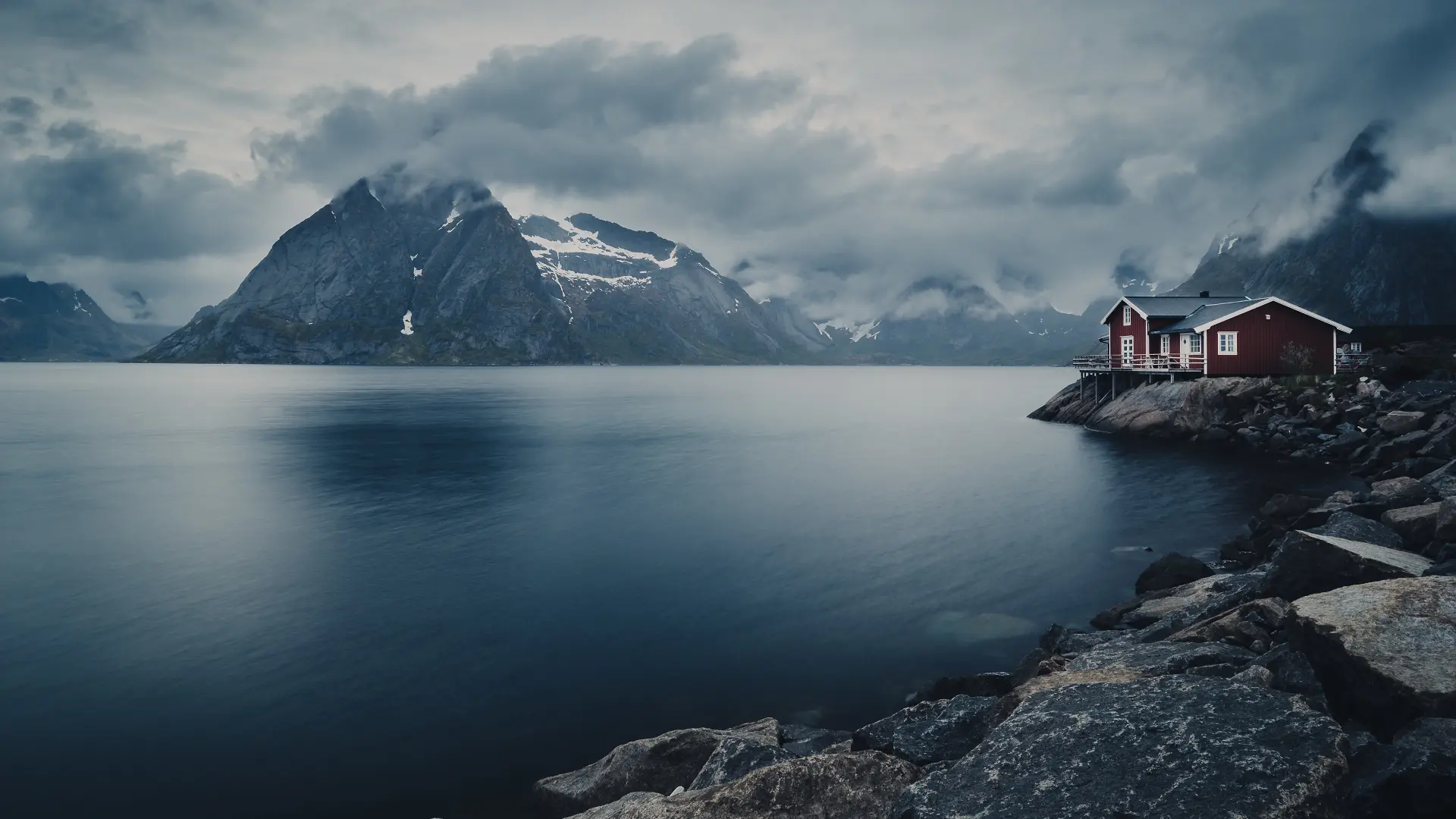
Weather dictates every hiking choice in Lofoten. Wind, rain, and low clouds may arrive without warning, even on calm mornings. Check forecasts often, but treat them as guidance, not certainty. Always have a backup plan and be ready to turn back if conditions worsen.
Footwear matters more than speed. Trails are often rocky or wet, so traction is vital even on short hikes. Layers, wind protection, and enough food and water are basic requirements. In exposed terrain, staying warm during stops is as important as staying cool while moving.
Seasons play a clear role. Summer brings long days and easier access to higher routes. In spring, autumn, and winter, lower-elevation hikes are usually more realistic. Snowshoeing can be an option in winter, while steep summer routes often become unsafe once snow and ice settle in. Knowing when to stop or change plans is part of responsible hiking here.
In Summary
Hiking in the Lofoten Islands ranges from accessible coastal walks to challenging mountain routes. Short distances and easy access can tempt ambitious plans, but changing conditions require caution.
Easy and moderate hikes suit most trips and offer flexibility when weather or energy levels shift. Demanding routes should be approached selectively, with experience, stable conditions, and enough time. Adapting plans to the season and landscape ensures hiking remains an enjoyable and safe way to explore Lofoten rather than a fixed objective to complete.